
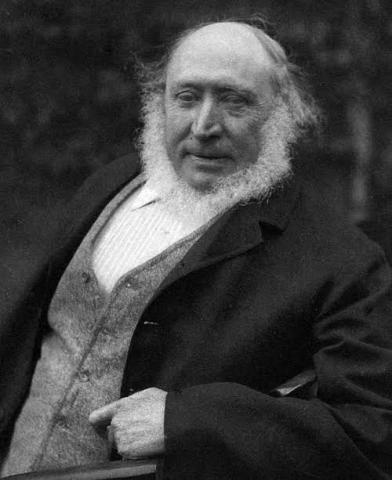
Quick Facts
Born: 7 June 1825 in England
Died: 20 January 1900
Nationality: United Kingdom
Genres: Poetry
Works: Poems by Melanter (1854), Epullia and other poems (1854), The Bugle of the Black Sea (1855), The Fate of Franklin (1860), The Maid of Sker (1872), Springhaven: a tale of the Great War (1887), Dariel: a romance of Surrey (1897)
Richard Doddridge Blackmore (born 7 June 1825 in England, died 20 January 1900), better known as R. D. Blackmore, is a British novelist who became very popular in the second half of the 19th century. A native, like writer Thomas Hardy of the West of England, he stands out for his vivid descriptions of the English countryside, and for the way his works are rooted in their geographical environment.
Often referred to as the "last Victorian," Blackmore pioneered a literary movement that continued with writers such as Stevenson. His relatives describe him as "proud, shy, reluctant, stubborn, kind and self-centered." Lorna Doone is the only one of her works to be published today.
Richard Doddridge Blackmore was born in Longworth in 1825, one year after his elder brother Henry (1824-1875). His father, John Blackmore, was parish priest. His mother died a few months after his birth of a typhus epidemic that hit the village. John Blackmore moved to his native Devon. Richard is entrusted to an aunt, Mary Frances Knight When she marries the Reverend R. Gordon, Richard goes to settle with them at Elsfield Presbytery, near Oxford. His father remarried in 1831 and Richard returned home. His long childhood stay in the lush country of Doone, in Exmoor and Badgworthy Water, made him love this campaign, which he immortalized in his novel Lorna Doone.
He received a scholarship from the University of Exeter, Oxford, from which he graduated in 1847. After a brief period as a private tutor, he decided to pursue a career in law: he entered the Middle Temple in 1849 and was called to the bar in 1852. However, ill health prevented him from working full-time in this field, and in 1854 he took up the post of Master of Classical Letters at Wellesley House Grammar School in Twickenham.
On 8 Nov. 1853 he married Lucy Maguire, a 26-year-old Catholic with delicate health, which might explain why he had no children. The couple is very attached to the four children of Lucy's sister, Agnes: he often invites them and takes part in their education. It seems that the Blackmores adopted Eva, one of Lucy's nieces, at the age of seven. Their marriage is described by Agnes as a happy marriage.