
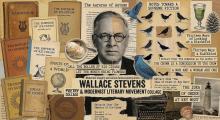
Why Wallace Stevens’ Poetry is the Ultimate Guide to Mindful Living and the Antidote to the AI Era
Although he appeared as a poet relatively late in his career, the author left...
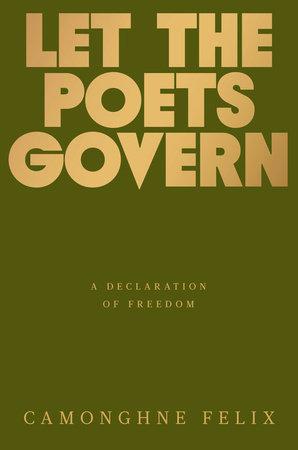
In this part-memoir, part-manifesto, an acclaimed poet interprets Black radical literary traditions to reimagine freedom through refusal.
“In these fierce yet tender pages, Camonghne Felix reveals how imagination can become a form of governance—an instrument for creating a world rooted in care, community, and radical possibility.”—Michelle Alexander, New York Times bestselling author of The New Jim Crow
Over the past decade, Camonghne Felix has been at the center of American politics, working in strategy, communications, and as a speechwriter. Throughout it all, she has maintained her unwavering belief in language’s foundational revolutionary potential, outside of its deployment for legislative and political ends. In this groundbreaking work of nonfiction, she argues that Black radical poetic traditions model an ethical code and overcome entrenched structures of patriarchy and paternalism, inventing a new form that examines the historical and legislative, and the personal and poetic.
Felix draws on stories from her life in campaigns and the decisions she has had to make: preparing speeches for candidates, responding to harassment, recruiting staff. She recounts her moving personal history—accompanying her mother, a lawyer, to court, and her father, a participant in the Grenadian revolution of 1983, to protests—as well as her coming-of-age being schooled in a wider tradition of Black radical thinkers, from Gwendolyn Brooks to Audre Lorde.
Through rupture, rhythm, and a refusal of politics as usual, Let the Poets Govern encourages us to hold ourselves to the standards of our highest ideals and embraces our shared humanity.
“Let the Poets Govern is an incisive and rigorous assessment of how people arrive within a moment and what they can make out of it—or how they can take it apart. There is incredible beauty and care in the language, and in the possible world(s) being built.”—Hanif Abdurraqib, author of There’s Always This Year
“In these fierce yet tender pages, Camonghne Felix charts a path through disillusionment toward a hard-won faith in what poets, dreamers, and ordinary people can build together. With unique insight, she reveals how imagination can become a form of governance—an instrument for creating a world rooted in care, community, and radical possibility.”—Michelle Alexander
“Acclaimed poet Camonghne Felix presents a convincing case for the revolutionary power of language when partnered with imagination, ethics and poetics. Part memoir, part manifesto, Let the Poets Govern is filled with radical vulnerability and candid reflection.”—Ms.
“Words matter. In Let the Poets Govern, Felix reiterates that poetry is not just for aesthetics—; it is being used on a daily basis to both cement and subvert power. Through this master-class text and the blackout poetry concluding each chapter, we are led to the wells where we can drink up the syntax and structure that have shaped us. The literary power grabs we make each day. The path to using language towards our own liberation. As Felix writes, ‘The language of the oppressor is alive. But so is the language of the oppressed.’”—Brea Baker, author of Rooted
“A few pages into Let the Poets Govern, you will want to read this book out loud to strangers on the street via bullhorn. Several chapters in, you’ll be pricing professional-grade stereo systems and asking friends if you can borrow their balcony for the weekend. The people need to hear what this poet has to say.”—Saeed Jones, author of How We Fight for Our Lives
“In this scathing indictment of the politics of fear, Felix’s voice is as sharp as ever. She blends memoir, poetry, and keen observation to unspool the facile logic of poetry as a precious and saintly thing. Instead, she shows us how the rhetoric of the poet can be a weapon to the wicked—or the righteous. It’s a candid, vulnerable story of an activist’s journey and the pernicious violence that language reveals or conceals.”—Eve L. Ewing, author of Original Sins
“Using her own experiences in both traditional political campaigns and offices as well as in grassroots organizing, Felix writes of disillusionment and inspiration with acumen and insight. . . . Blending the personal, the poetic, and the political, Felix’s impassioned observations are buoyed by her erasure poems, which illustrate how poetics can and should evolve. Give to readers of Claudia Rankine’s Citizen: An American Lyric.”—Booklist
“An evocative mix of literary analysis and memoir exploring language’s role in oppression and how it can be repurposed as a tool of liberation . . . This is a moving testament to the power of words.”—Publishers Weekly, starred review
Although he appeared as a poet relatively late in his career, the author left...
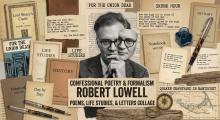
With his poetry, which he began writing in the early 1940s, the author is...
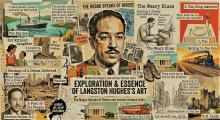
At the beginning of his autobiography, "The Big Sea", Langston Hughes evoked...