

Why Wallace Stevens’ Poetry is the Ultimate Guide to Mindful Living and the Antidote to the AI Era
Although he appeared as a poet relatively late in his career, the author left...
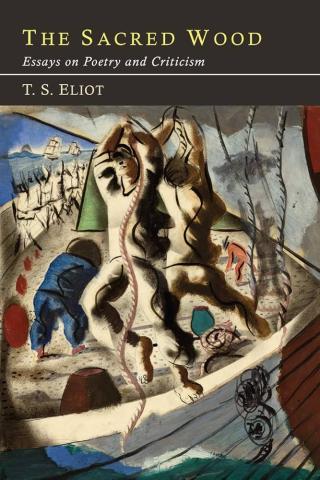
This collection, published in 1920, gathers essays written between 1917 and 1920. Most were originally published in the magazine * The Athenaeum *.
They bear witness to the first phase of Eliot's literary criticism, in a period of transition marked by the First World War. In the preface to the 1928 reissue, Eliot emphasized that it was a question both of seeking new artistic forms and of appropriating essential traditional forms.
The consistency of these essays rests on the rejection of the superficiality and self-sufficiency of the dominant poetry. Based on the romantic and critical theories of Matthew Arnold and the symbolist program of the Frenchman Rémy de Gourmont, Eliot proclaims the primacy of the autonomous authority of poetry, that is, not determined by morality, politics or religion. Almost tautologically, he asserts that poetry has value only as poetry. It exists through form, which differs from abstract norms, biographical peculiarities, feelings and visions.
Although he appeared as a poet relatively late in his career, the author left...
With his poetry, which he began writing in the early 1940s, the author is...
At the beginning of his autobiography, "The Big Sea", Langston Hughes evoked...